
My name is Viviane Solia—or Shanti, my spiritual name. I am now in my eighty-fifth year, gradually preparing for the Great Departure. As I do so, I find myself looking back over my life in order to understand it more deeply, to resolve what still needs resolving, and to bring to completion whatever remains unfinished. I hope to make as complete a life review as possible, and here I would like to share a few excerpts from that journey.
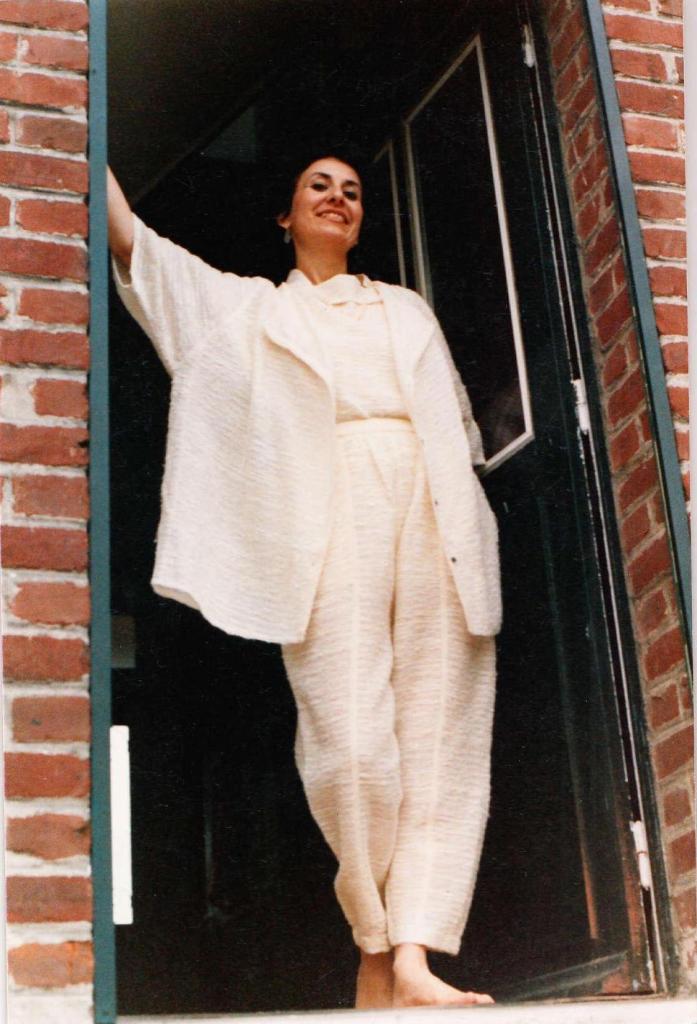
What have I learned? Since life is a school, have I completed everything that needed to be completed? Have I let go of everything that no longer serves me? Have I expressed my gratitude, offered forgiveness, and told those I love that I love them? In this lifetime, have I followed the path I chose before I was born? Am I still walking my true life’s path? That is what we are about to discover.
I was born during the final years of the Second World War in Europe and grew up in the post-war years, largely unaware of what was happening beyond the walls of my home. My parents were unconventional for their time. Both had separated from previous spouses who were still alive, and as a result they lived together outside the blessing of the Catholic Church, burdened by the social shame that accompanied such a relationship. They struggled simply to survive.
We were poor, although I did not know it then.
A friend of my father worked as the caretaker of an old Italian castle in Nice. Within its vast park he cultivated the famous carnations of Nice, France. While my parents were searching for a place to live, they were offered the apartment located in one of the castle’s towers.
Today, the castle has disappeared, replaced by the Sophia Antipolis University campus. My childhood was therefore unusual and rather solitary, spent in this timeless setting that felt completely disconnected from the rest of the city. I never told anyone where I lived, aware that my family occupied a place far outside what society considered normal.
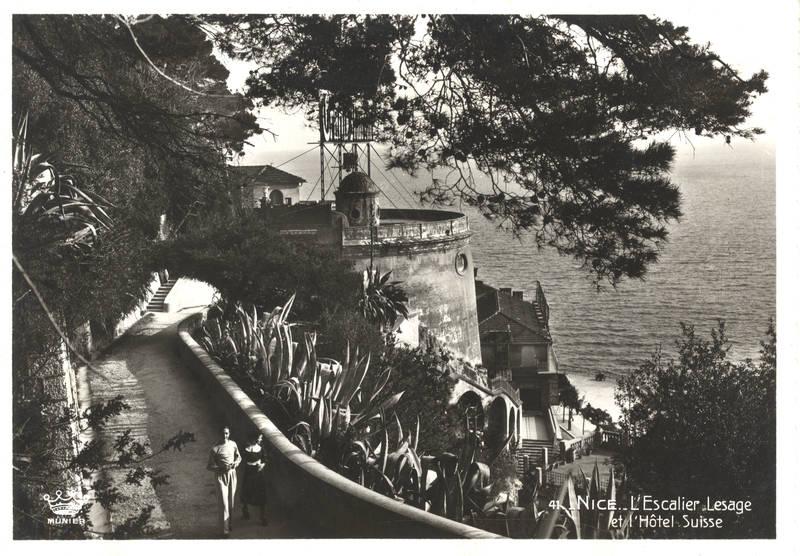
Archives Nice Côte d’Azur, 10 Fi 7906 (don Françoise de Tarnowsky)
Then, just before my sixth birthday, my brother was born.
I found it very difficult to lose my place as my mother’s little queen and to have to share her with this baby who seemed to cry all the time. It marked the beginning of one of the hardest periods of my childhood.
By the age of eight, I begged my mother to send me to boarding school because I simply could not bear the situation any longer. She did so, having little choice.
When I was twenty-three, I decided to spend my holidays in Québec. That journey proved decisive for the rest of my life. I immediately realized how comfortable I felt there and decided to stay for a while. At first, I worked as an au pair for an English-speaking family living in the Town of Mount Royal.
Then, at the end of the school year, I was recruited by Air Canada as a flight attendant. I was hired largely because I spoke several foreign languages, even though I was only just tall enough to meet the company’s minimum height requirement.
I adapted easily to emigrating on my own. In truth, I needed distance from my family. I did not have the kind of emotional attachment that would have drawn me back to France. Although I was born there, I had never truly felt at home in France.
My mother no longer needed me; she had her son. In fact, I remain grateful to my brother for giving our mother something I could not. He gave me the freedom to travel, to live life on my own terms, far from France. Thanks to him, I was able to pursue my spiritual path without the weight of family obligations.
I loved both my new life in Montréal and my work, although coping with constant time-zone changes could be exhausting. Except for my first year, when I worked on standby, I flew almost exclusively transatlantic routes, which allowed me to visit both my family and my friends in Europe on a regular basis.
Around that time, Montréal was experiencing its Quiet Revolution—a peaceful transformation, unlike the violence of the French Revolution. The new energy carried by Québec’s younger generation, combined with the departure of many English-speaking Canadians who chose to settle elsewhere in Canada or abroad, profoundly changed Montréal’s social and cultural landscape. French-speaking students in Québec were striving to free themselves from both English domination and the authority of the Catholic Church. As a consequence, many rejected not only the Church itself but everything associated with God and spirituality.
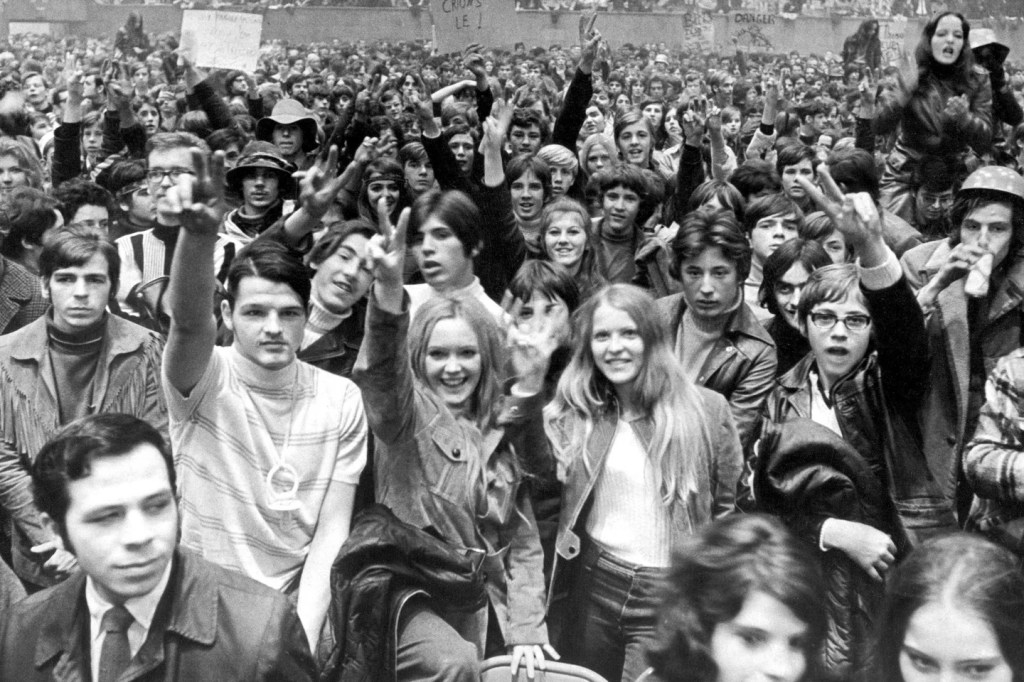
Meanwhile, young Americans were fighting to avoid being sent to the Vietnam War. The United States had only recently emerged from the Second World War, during which countless Americans had died helping to liberate Europe from Nazism. Faced with what felt like a profound loss of meaning, many young people turned toward spirituality and to the communities that were beginning to spring up across North America.
The hippie era became a remarkable period of spiritual awakening. Young people were searching for a way to survive the immense suffering left in the wake of war around the world. Their wounded souls hungered for something they could not find in the political ideals of their countries.
They longed to reconnect with the Divine, to nourish their souls and find a reason to continue living on this Earth.
Like many others, I found myself searching for spiritual nourishment, for transcendent love and, for many of my contemporaries, sexual liberation—although I must admit that last subject interested me rather less.
Beginning in 1966, I became interested in the wave of Indian spiritual masters who were coming to the United States, among them Paramahansa Yogananda and Swami Muktananda.
There was also Jiddu Krishnamurti, who had left Ojai, California, to hold his annual summer gatherings in Saanen, Switzerland. I was immediately drawn to what Krishnamurti offered. He struck me as an exceptionally serious teacher, and travelling to Switzerland was relatively easy for me.
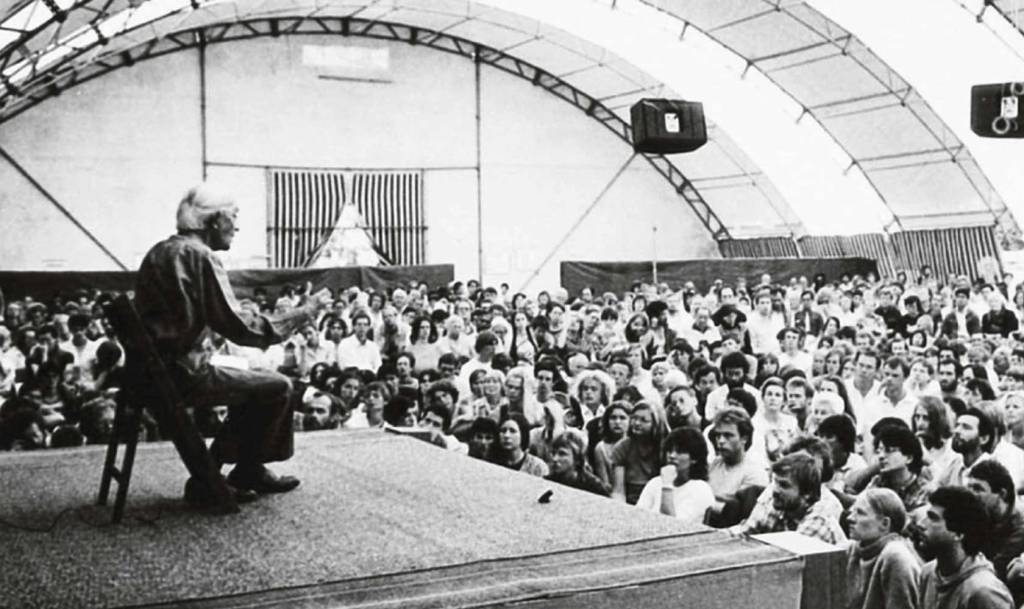
Photo by Mark Edwards © KFT
The moment I arrived in Saanen, I felt the presence of the Divine throughout the village.
Krishnamurti himself had experienced something similar. The first time he visited that region, he said he had been deeply moved by the peace that permeated the place.
Then the talks began.
As I listened, my heart opened completely to everything he shared with us. I was so deeply touched by the experience that, once I returned to Montréal, I tried for as long as possible to preserve the inner state I had discovered there.
It was as though I had become illuminated from within.
« Do you know what it means to learn? When you are really learning you are learning throughout your life and there is no one special teacher to learn from. Everything teaches you- a dead leaf, a bird in flight, a smell, a tear, the rich and the poor, those who are crying, the smile of a woman, the haughtiness of a man. You learn from everything, therefore there is no guide, no philosopher, no guru. Life itself is your teacher, and you are in a state of constant learning. »
Krishnamurti
This happened to me almost every time I found myself in the presence of great spiritual masters.
They acted like lamps, illuminating something within me. While I was with them, I lived in their light. Afterward, that light continued to accompany me for a while.
But little by little, as time passed, it would gradually fade.
During my stay in Saanen, I met Gabrielle, a woman from Nice with whom I quickly became friends. We agreed that we would meet there again the following summer.
A few months after the conference, however, she wrote to tell me that she had met a group of Tibetan lamas who had invited her to the Château de Plaige in Burgundy, France. That was where she would be spending the following summer, and in her letter she warmly invited me to join her.
I distinctly felt that one door was closing while another was opening.
That is how, the following summer, I found myself at the Temple of the Thousand Buddhas in France. As soon as I arrived, someone told me that I had come at exactly the right moment. Kalu Rinpoche was about to begin the Chenrezig initiations.
I seized the opportunity without hesitation.
There I received my very first spiritual initiation, along with a new name: Sonam, a Tibetan word meaning merit, good fortune, or auspiciousness.
That was how I entered the world of Tibetan Buddhism.
From then on, whenever my work brought me to Paris during a layover, I would always make time to visit the Tibetan center to meditate, pray, and spend time with fellow practitioners.
One day I learned that a lama who had recently escaped Tibet was being sent to Honolulu to establish a new Tibetan Buddhist center in Hawaii. Without giving it a second thought, I bought a plane ticket so that I could arrive in Honolulu at the same time as Karma Rinchen.
The moment we met, I sensed an immediate connection between us, even though he spoke very little English.
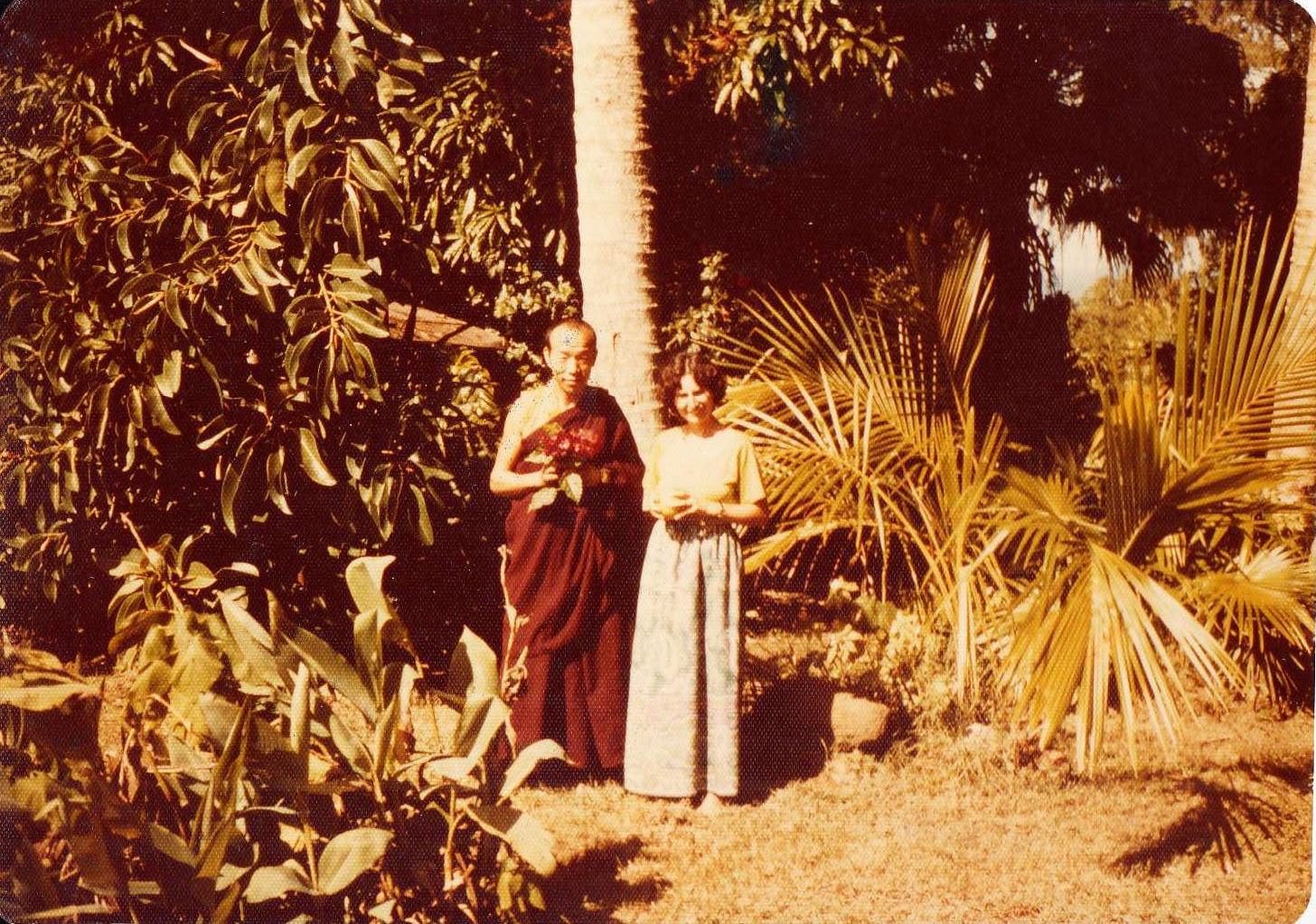
Since then, Rinchen has become a respected lama whose teachings have reached as far as Australia.
During my brief stay with him, we received a gracious invitation from the Zen master Roshi Robert Aitken to visit his zendo on Maui.
The lama’s students were mostly hippies who delighted in the warmth and spontaneity of the Tibetans they met. They appreciated their joyful, down-to-earth spirit, so different from the strict discipline traditionally associated with Tibetan monasteries.
They smoked, lived freely, and embraced a lifestyle very different from my own.
Then I stepped into the zendo.
What a contrast.
Everything was ordered.
Everything breathed stillness.
Everything was… Zen.
I immediately felt at home.
Once again, I experienced that familiar inner certainty.
The door to Tibetan Buddhism was gently closing, while the door to Zen was opening before me.
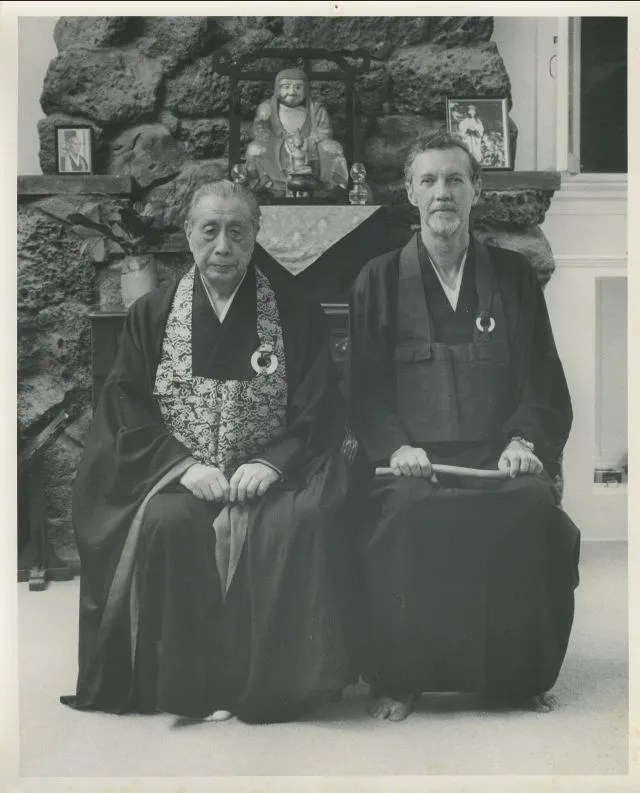
I decided to enroll in the next Zen retreat, which was due to begin shortly afterward.
I was completely unaccustomed to sitting in the Zen posture for fourteen hours a day, and my body suffered terribly.
Everything hurt.
Yet inwardly I felt as though I were in heaven.
I had come home.
During the retreat, the Master noticed that I seemed to be repeatedly approaching a state of ecstasy, perhaps even the threshold of a first awakening—or kensho, as it is known in the Zen tradition.
He quietly instructed several senior students to keep a close eye on me.
If a genuine kensho, or even a deeper awakening known as satori, were to occur, he wanted to be able to assist me immediately so that the experience could unfold under the best possible conditions.
At the time, I did not fully understand what was happening.
I simply knew that something profound was taking place within me.
Looking back, both my senses and my heart were telling me that I had found my true path.
All I had to do was follow it.
And that is exactly what I did for several years.
In 1977, I attended yet another sesshin, an intensive Zen meditation retreat.
This time, my companion of the previous ten years, Volker, came with me.
At last.
It would be both his first retreat—and his last.
Our relationship had begun to show signs of strain, and I hoped that inviting him to the zendo on Maui might transform something between us.
I carried great hope into that retreat.
More than anything, I longed for him to experience the same kind of inner revelation that Zen had awakened in me.
I dreamed that he would become not only my life partner but also my companion on the spiritual path.
How disappointed I was.
The retreat revealed, with unmistakable clarity, that Volker was simply not ready to commit himself to a spiritual life.
He was, at heart, a true Epicurean.
He could not understand why anyone would willingly spend entire days sitting in silence, listening to Zen teachings, and attempting to give birth to one’s true self.
I realized that if I wished to continue on this path, I would have to walk it alone.
The mere thought of leaving Volker tore my heart apart.
Who would I become without him?
Where could I possibly go?
It was then, at the very end of the retreat, that Volker handed me a book someone at the zendo had lent him before I arrived—we had travelled on different flights.
The book was titled Only One Sky, written by Bhagwan Rajneesh, who would later become known throughout the world as Osho.
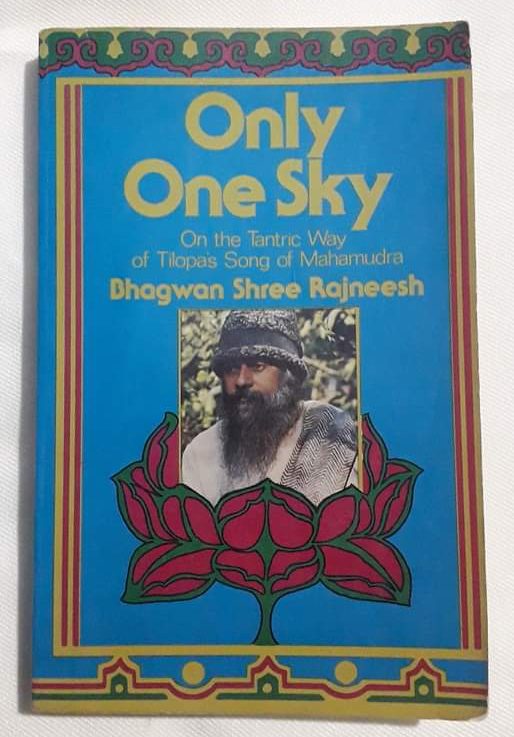
He had no idea that this simple gift would become one of the great turning points of my life.
It marked the end of my years within Buddhism.
The end of my career as a flight attendant.
The end of my life in Montréal.
And above all, the end of my life with Volker.
He would be my first and my last great love.
It took me a very long time to heal from the loss of that relationship.
In the end, it freed me forever from the need to seek fulfillment through romantic love.
It seems that life offers us the choices that correspond to the deepest aspirations of our soul.
Although this transition was extraordinarily painful, I eventually understood that the universe was offering me exactly what I had longed for at the deepest level:
a voluntary exile,
a life free of attachments,
a life in which I could devote myself entirely to spiritual exploration.
That is precisely what Osho’s ashram was about to offer me.


Laisser un commentaire